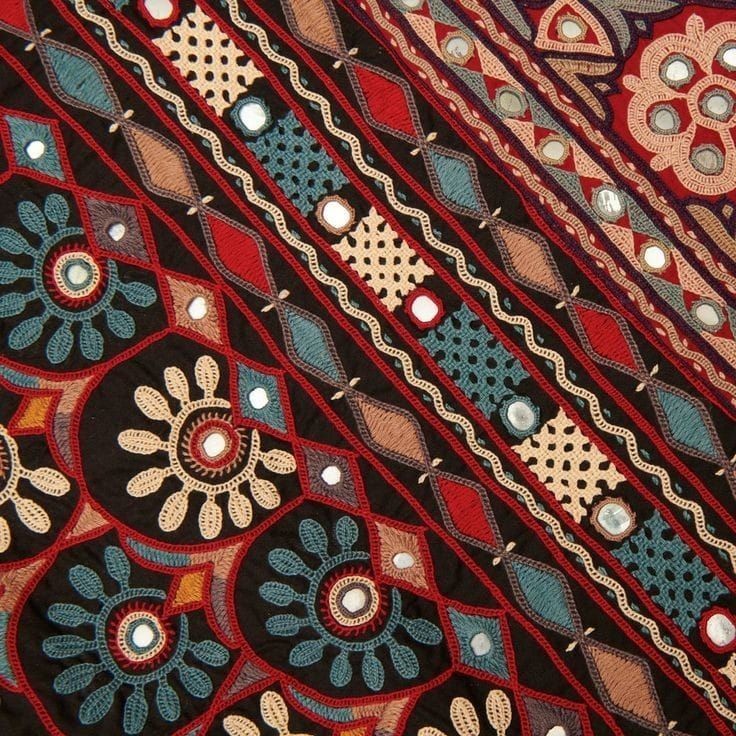
Kutch embroidery is a traditional form of handicraft that originated in the Kutch region of Gujarat, India. The embroidery technique involves the use of brightly colored threads and mirrors, beads, and shells to create intricate patterns and designs on fabrics such as cotton, silk, and wool.
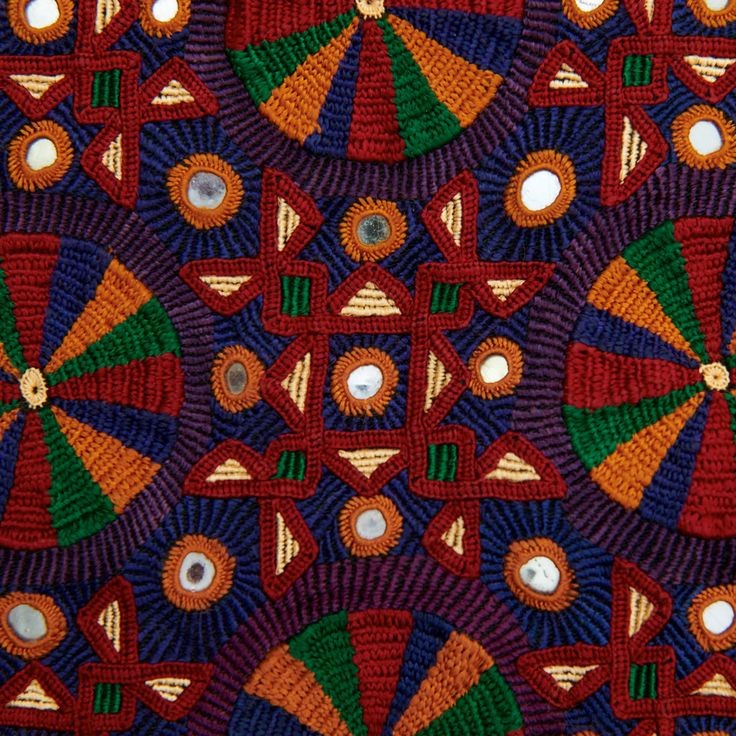
The history of Kutch embroidery can be traced back to the 16th century when the Mughal emperors brought skilled artisans from Persia and Central Asia to the Indian subcontinent. These artisans introduced new techniques and designs to the local craftsmen, who then incorporated them into their own art forms. Kutch embroidery is believed to be one such art form that was influenced by Persian and Central Asian embroidery techniques.
Over the centuries, Kutch embroidery has evolved and has been influenced by various cultures and traditions. The embroidery patterns and motifs vary from village to village and are often inspired by local flora and fauna, as well as religious and cultural symbols.
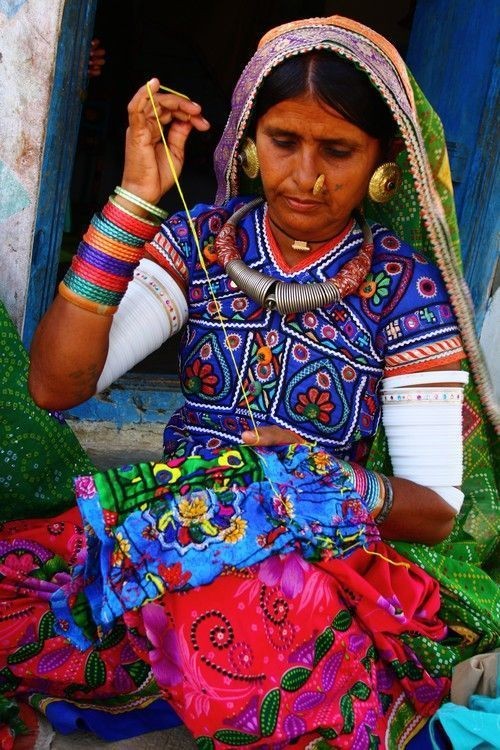
The embroidery is done by hand and requires a great deal of skill and precision. The artisans use a variety of stitches such as chain stitch, buttonhole stitch, satin stitch, and mirror work to create intricate designs. They often use contrasting colors to highlight the design and make it more vibrant.
One of the most distinctive features of Kutch embroidery is the use of mirrors. The mirrors are typically circular or diamond-shaped and are often encased in brightly colored thread. The mirrors are believed to bring good luck and ward off evil spirits.
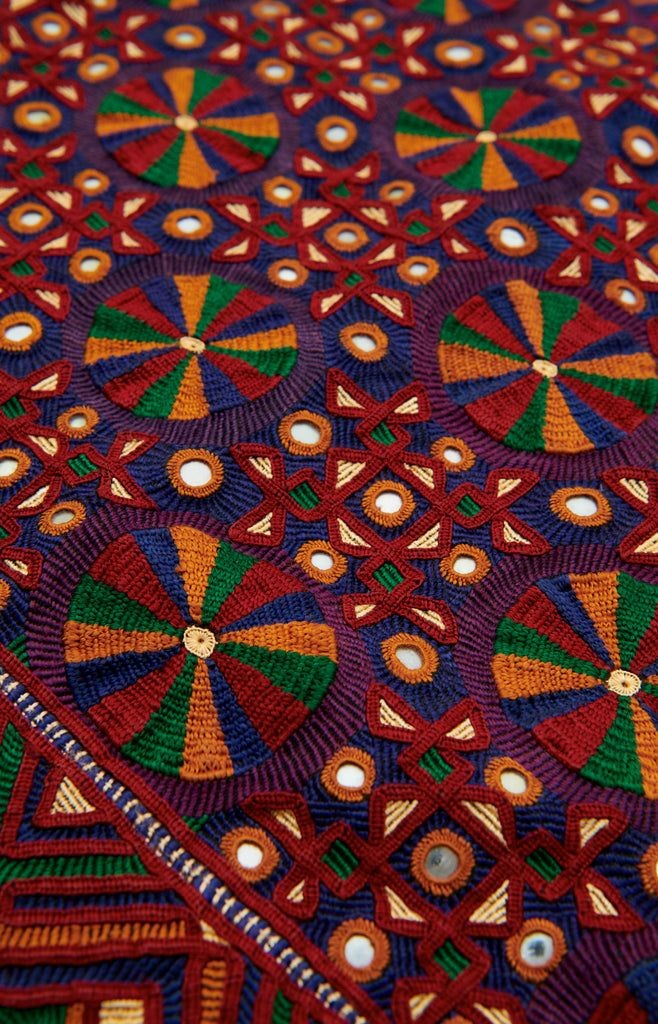
Kutch embroidery has gained popularity in recent years and has become an important source of income for many women in the Kutch region. The government of Gujarat has also taken steps to promote and preserve this art form. Several organizations have been set up to train and support women artisans, and exhibitions are held regularly to showcase their work.
Let us now discuss the materials and techniques used in Kutch embroidery.
Materials used in Kutch embroidery:
Fabric: The most common fabric used in Kutch embroidery is cotton. The fabric is usually white or cream-colored, and it is first washed and starched to give it a firm texture. Silk and wool fabrics are also used for Kutch embroidery.
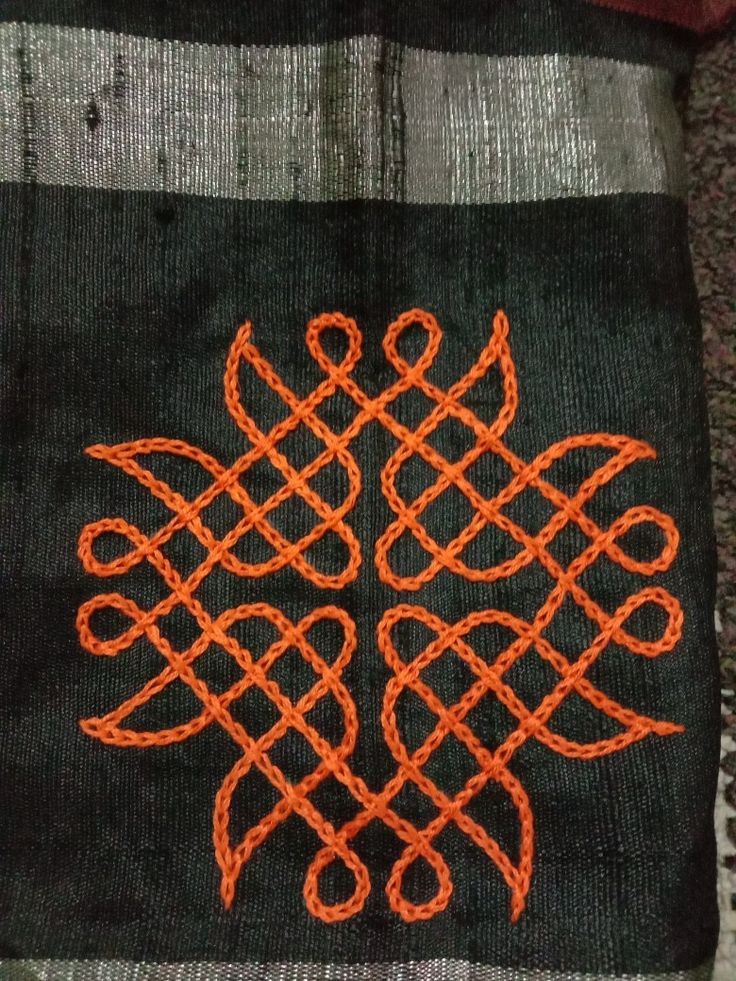
Thread: The thread used in Kutch embroidery is usually cotton or silk. It comes in a wide range of colors and is used to create intricate designs and patterns on the fabric.
Mirrors: Mirrors are an essential part of Kutch embroidery. They are usually small, round, and made of glass. They are used to add sparkle and shine to the embroidery.
Beads: Beads are another common material used in Kutch embroidery. They come in a wide range of sizes, shapes, and colors and are used to add texture and dimension to the embroidery.
Sequins: Sequins are also used in Kutch embroidery to add sparkle and shine. They come in a wide range of shapes and colors and are usually made of plastic or metal.
Shisha: Shisha is a type of mirror that is used in Kutch embroidery. It is usually larger than regular mirrors and is shaped like a diamond or a triangle. Shisha is used to create larger, more elaborate designs in the embroidery.
Techniques used in Kutch embroidery:
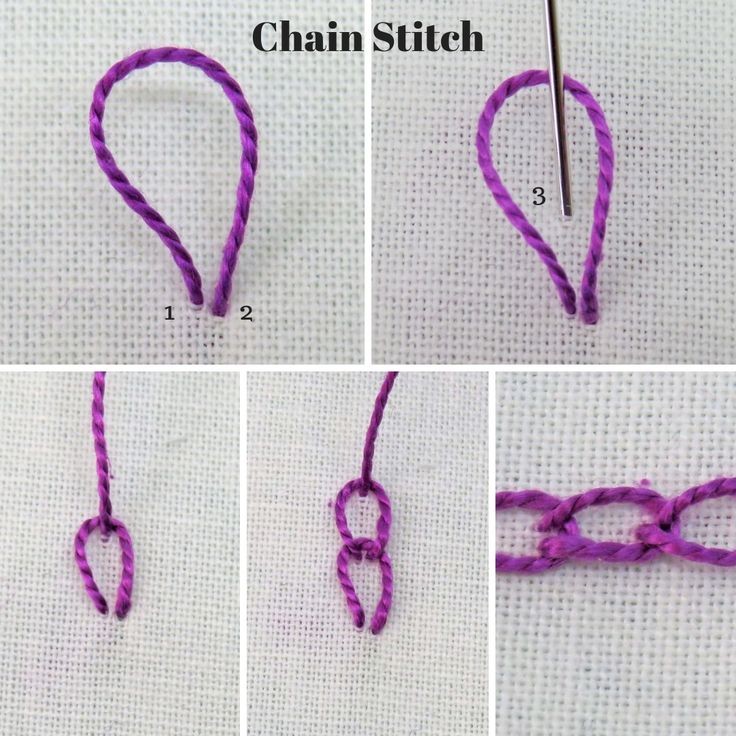
Chain stitch: Chain stitch is the most common stitch used in Kutch embroidery. It is used to create lines and outlines in the embroidery.
Satin stitch: Satin stitch is used to fill in larger areas of the embroidery with a smooth, flat surface.
Buttonhole stitch: Buttonhole stitch is used to create raised edges and outlines in the embroidery.
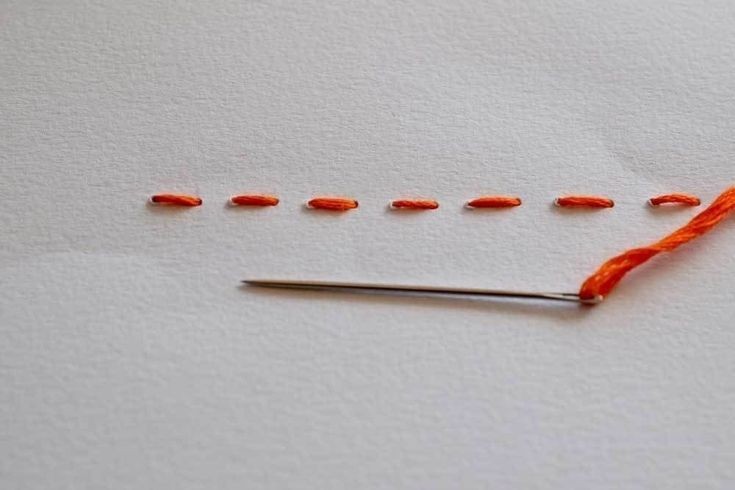
Running stitch: Running stitch is used to create small, delicate lines and patterns in the embroidery.
Cross stitch: Cross stitch is used to create small, X-shaped patterns in the embroidery.
Herringbone stitch: Herringbone stitch is used to create a decorative, zigzag pattern in the embroidery.
Mirror work: Mirror work is a technique that involves attaching mirrors to the fabric using small stitches. The mirrors are usually arranged in a symmetrical pattern to create a stunning visual effect.
Kutch embroidery is a highly decorative and intricate embroidery style that involves the use of a wide range of materials and techniques. It is a testament to the rich cultural heritage of Gujarat, India, and has become increasingly popular around the world in recent years. Whether you are a fan of traditional embroidery or are simply looking for a new craft to try, Kutch embroidery is definitely worth exploring.
 A Little This and That of Life